What Is a Memory Foam Mattress?
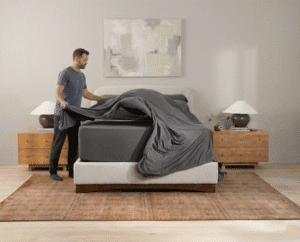
Memory Foam Mattress is mainly made of Viscoelastic Polyurethane Foam. It feels soft yet resilient, and slowly rebounds after being pressed. Originally developed by NASA in the 1960s, this material was used to reduce the pressure astronauts endured during launch. As the technology became widespread, it gradually entered daily life and is now widely used in products such as mattresses, pillows, and cushions.
What Is a Hybrid Mattress?
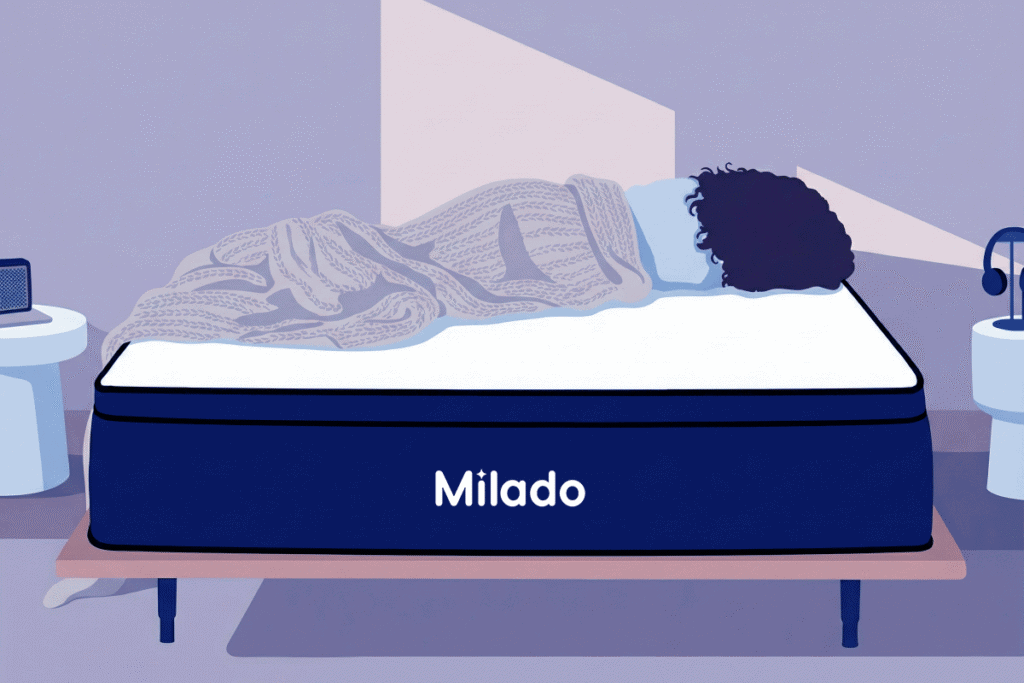
Hybrid mattress is a modern mattress that combines the advantages of innerspring mattresses and foam mattresses. It usually uses pocketed coils inside and is covered with layers of memory foam, latex, or high-density foam. This multi-layer design not only ensures the support and stability of the mattress but also adds softness and a wrapping feeling, making the sleeping experience more comfortable and balanced.
Inside Look: Memory Foam vs. Hybrid Mattress
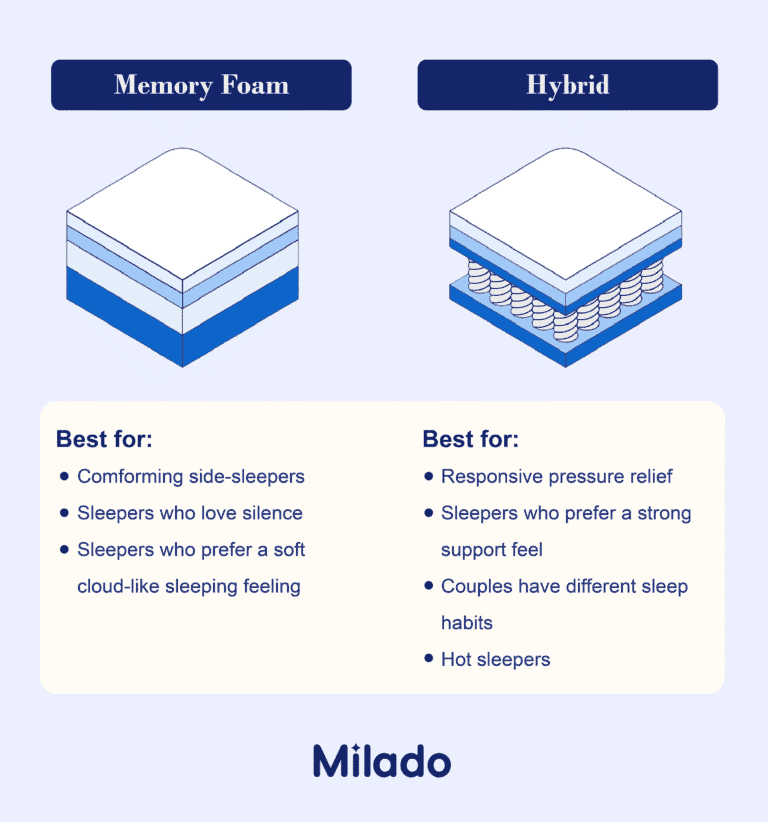
Memory foam mattresses are made up of foam layers with different densities. The top memory foam layer conforms to the body's curves, while the high-density bottom layer provides support. The all-foam design distributes pressure evenly, offering a soft sleeping feel and obvious wrapping sensation. However, its breathability and edge support are relatively limited.
Hybrid mattresses combine pocketed coils with a foam comfort layer. The top layer may use memory foam or latex. The bottom coils provide support and resilience, and at the same time create air channels to improve breathability. The overall sleeping feel is relatively firm, which is more suitable for users who need higher support and tend to turn over frequently.
Pros of Memory Foam Mattress
Ⅰ. Support and fit
High-quality memory foam is usually made of high-density polyurethane foam, and it gradually regains its shape after external force is removed. Its "slow rebound" feature allows the material to fit the supporting parts automatically according to the body curve, helping maintain a more natural spinal curve.
Ⅱ. Stable structure
High-density memory foam usually has good resilience and shape retention. In daily use, it is not easy to sag and rarely experiences structural fatigue.
Ⅲ. Noise control
Since memory foam has no metal springs in its structure, it produces almost no mechanical friction noise when you turn over or move.
This quiet feature is especially popular in hotels, providing users with a smoother and undisturbed sleeping experience.
Cons of Memory Foam Mattress
Ⅰ. Slow rebound speed
Traditional memory foam is famous for its slow rebound property and is greatly affected by temperature. In a low-temperature environment, the movement of foam molecules slows down, and the speed of shape recovery will decrease further.
Ⅱ. Volatile organic compound (VOC) emissions
Polyurethane foam releases a small amount of volatile organic compounds (VOCs) right after production.
Currently, better-quality products on the market, like the memory foam mattress made by Milado Furniture Co., Ltd., have passed safety certifications such as CertiPUR-US. These certifications ensure the foam contains no harmful solvents or heavy metals, and its VOC emissions meet indoor air safety standards.
Ⅲ. Durability and long-term support attenuation
The support performance of memory foam mattresses gradually deteriorates over time, especially in high-temperature and high-humidity environments or under long-term local pressure. This material fatigue phenomenon is characterized by decreased foam density, slower rebound, or localized sinking.
Ⅳ. Heavy and inconvenient to carry
Due to the high density of memory foam, mattresses of the same size are usually heavier than traditional spring mattresses, making them difficult to move or flip.
Advanced Memory Foam Solutions
Ensure universal comfort with Milado’s adaptive memory foam, engineered for commercial durability.
View morePros of Hybrid Mattresses
Ⅰ. Support Performance Has Been Significantly Improved
Hybrid mattresses, with their combined structure of pocketed coils and foam layers, generally offer better overall support than pure memory foam mattresses. The coil layer maintains the shape better, keeping the mattress stable when supporting the waist and spine.
Ⅱ. Better breathability
Compared to memory foam with a closed structure, the spring layer of the hybrid mattress has natural ventilation channels, which help with air circulation and moisture dissipation.
Ⅲ. Dynamic Response and Rebound Characteristics
The presence of the spring layer enables the hybrid mattress to recover its shape more quickly after pressure release, reducing the "sinking feeling".
Ⅳ. Extend Service Life and Maintain Mattress Shape
Thanks to the dual support structure of springs and foam, hybrid mattresses usually maintain good shape stability during long-term use. The high-density foam layer can slow down local sagging, while the steel springs provide continuous rebound force.
Cons of Hybrid Mattresses
Ⅰ. Fluctuations in Durability Are Relatively Large
The presence of the spring layer enables the hybrid mattress to recover its shape more quickly after pressure release, reducing the "sinking feeling".
Ⅱ. Fluctuations in Durability Are Relatively Large
In hybrid mattresses, the spring system may produce slight noises when you turn over or your body weight changes. At the same time, spring vibrations may be transmitted to the other side of the bed. Compared with full foam mattresses, their vibration isolation effect is usually not as good as that of pure foam mattresses.
The hybrid mattresses produced by Milado Furniture are not as completely silent as full-foam mattresses. However, with properly optimized structural design, the noise and vibration have been controlled within a relatively comfortable range.
Ⅲ. Heavy weight, inconvenient to carry
The composite structure of hybrid mattresses is usually heavier than all-foam mattresses, so moving and installing them may require more manpower or tools. This may also increase transportation and handling costs.
Ⅳ. The price gap between brands is significant.
Hybrid mattresses cover a wide price range from mid-range to high-end, and the price of high-end models is significantly higher than that of entry-level ones. Although the price gap is large, the performance improvement is not always proportional. Consumers need to comprehensively consider comfort, durability, and budget when making a choice.
Conclusion
Engineered for Adaptive Support
Leverage our advanced pocket spring technology to provide individualized pressure relief and superior motion isolation for every sleeper.
View moreMilado Premium Mattress System for Residential and Hotel Projects
At Milado, we believe good sleep is not a luxury, but a balance between comfort and structure. Our memory foam and hybrid mattresses embody this design philosophy. Each mattress combines a high-density support layer and a zoned structure, allowing it to fit the body naturally while maintaining stable support and good breathability.
No matter if it is a luxury home bedroom, a boutique hotel, or a custom project that calls for a personalized setup, Milado mattresses strike the perfect balance between comfort and aesthetic appeal. Our team keeps refining material combinations and strictly follows international certification standards to ensure lasting performance in noise reduction, support distribution, and durability.
Choosing between a memory foam or hybrid mattress isn’t just about style — it’s about what each space really needs in terms of comfort and function. At Milado, we’re dedicated to creating flexible and sustainable sleep solutions for different settings, turning every moment of rest into true recovery for both body and mind.
Learn More About Mattresses
Stay updated on the latest mattress trends and product innovations. Subscribe now to receive our exclusive Commercial Sourcing Guide