Deciding between stocking memory foam or spring mattresses is a critical inventory decision. Wholesale buyers must weigh consumer preferences, profit margins, and return rates. The memory foam vs spring mattress debate is not just about comfort. It is about understanding your target market. Traditionalists often prefer the bounce of springs, while younger generations lean toward the contouring pressure relief of foam. To maximize sales, you need a balanced portfolio. This guide breaks down the technical differences and market advantages of each to help you curate the perfect Milado showroom selection.
What Is a Memory Foam Mattress?
NASA originally designed memory foam, or viscoelastic foam, in the 1960s. For the bedding industry, it revolutionized sleep comfort. It is a high-density polyurethane material that reacts to body heat and pressure. When a sleeper lies down, the foam molds to their unique shape. When they get up, it slowly returns to its original form.
In your inventory, these mattresses represent a high-value category. They often market them to relieve pain and improve posture. (For a deeper dive into mattress structures, see our guide on types of mattresses explained.)
Pros of a Memory Foam Mattress
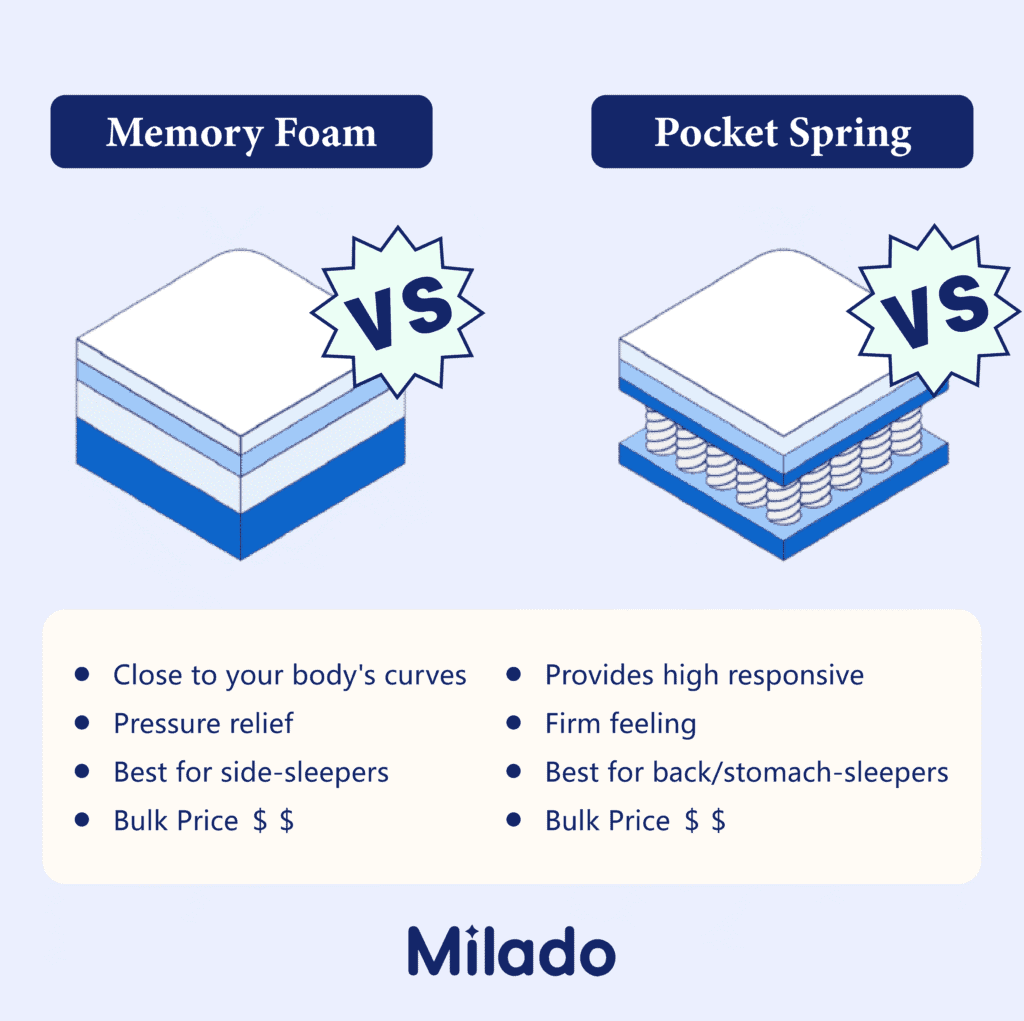
Why do consumers love them? The primary selling point is pressure relief. The foam displaces weight evenly, eliminating the painful pressure points on the hips and shoulders.
Beyond comfort, motion isolation is a huge selling point for couples. If one partner moves, the other doesn’t feel it. The material is also inherently hypoallergenic. The dense structure resists dust mites and allergens better than open fibrous materials. Finally, these mattresses are quiet, with no squeaky coils to disrupt sleep.
Advanced Memory Foam Solutions
Cons of a Memory Foam Mattress
Despite their popularity, foam beds have drawbacks you must address with customers. The most common complaint is heat retention, as traditional foam can trap body heat, resulting in sweaty sleep.
Some users also report a “stuck” feeling because of slow response times. They feel like they are sinking in quicksand rather than sleeping on top of the bed. You must also know about off-gassing. Lower-quality foams can release chemical odors (VOCs) when new, so always source certified foams to mitigate this issue.
Types of Memory Foam Mattresses
To combat the “cons,” manufacturers have evolved the technology. You should be familiar with these three main variations of your stock.
- Traditional Memory Foam: The classic viscoelastic experience. It offers superior motion isolation that made the material famous, though it keeps the most heat.
- Open-Cell Foam: Uses a manufacturing process that creates balloon-like cells within the structure. This design enables better airflow and faster response times than traditional foam, reducing the “quicksand” sensation.
- Gel/Cooling Foam: The modern standard for premium inventory found in the Milado collection. A cooling memory foam mattress infuses conductive gel beads or graphite into the material. This pulls heat away from the sleeper and solves the number one complaint about foam beds.
What Is a Spring Mattress?
The spring mattress, or innerspring, is the industry’s traditional heavy hitter. It features a steel-coil support core topped with fiber or foam comfort layers. While considered “old school,” they still command a significant market share because of familiarity and price point.
Pros of Spring Mattress
Spring mattresses remain popular for tangible reasons. First and foremost is airflow. The open space between the coils allows air to circulate freely, keeping the mattress naturally cooler than foam.
People also value them for their responsiveness. They offer “bounce,” which makes moving around in bed easier for older adults and people with mobility challenges. From a business perspective, they are cost-effective. Innerspring models have lower manufacturing costs, enabling competitive retail pricing.
Engineered for Adaptive Support
Cons of Spring Mattress
Spring mattresses often have downsides related to longevity and motion transfer. In older designs, motion transfer is significant, meaning movement travels across the entire surface.
Durability can also be an issue with budget models. Cheap coils can lose their temper (springiness) over time, leading to sagging. Furthermore, friction between metal parts can cause noise and squeaking as the mattress ages.
Types of Spring Mattress
Springs are not all equal. Understanding the coil system is vital for explaining value to your customers.
- Bonnell Coils: The hourglass-shaped coils linked by wire. These are the most affordable but offer the least motion isolation. They are common on budget dorm or hostel mattresses.
- Continuous Coils: Made from a single piece of wire. They are very durable, but do not contour well to the body.
- Pocket Spring Mattresses: The premium choice for modern inventory. Fabric pockets wrap each coil, which allows them to move independently. A pocket spring mattress offers the contouring benefits of foam with the airflow of springs.
Learn More About Mattresses

Inside Look: Memory Foam vs. Spring Mattress
When making your final bulk purchasing decisions, compare these two categories side by side on key performance metrics.
1. Durability and Lifespan: Memory foam generally outlasts traditional Bonnell spring mattresses. Springs can sag or break after 7-8 years, while high-density foam can maintain its shape for 10+ years. However, a high-quality pocket spring unit can rival foam in longevity.
2. The Hybrid Compromise: If you cannot decide, the market is shifting toward hybrids. These combine a pocket spring mattress support core with a cooling memory foam mattress top layer. They offer the best of both worlds: the bounce and airflow of springs with the pressure relief of foam. (Read more about how these compare in our article on memory foam vs hybrid mattresses.)
3. Shipping and Logistics: For wholesale buyers, memory foam has a clear logistical advantage. It compresses easily into a box (“Bed-in-a-Box”). This drastically reduces your shipping costs and storage footprint. Unlike modern pocket springs, you cannot roll a traditional rigid innerspring.
4. Target Market Alignment: Success comes from matching the mattress to the customer type. Stock spring mattresses for budget-conscious shoppers, hot sleepers, and traditionalists who prefer a firm, bouncy feel. Conversely, stock memory foam is ideal for couples who need motion isolation, side sleepers who need pressure relief, and customers focused on pain management.
The Verdict on Your Inventory
Balancing your inventory with a mix of cooling memory foam mattresses and robust pocket spring mattresses ensures you never have to turn a customer away. At Milado, we manufacture both styles with strict quality control to ensure your bulk orders deliver satisfied end users.
Contact our wholesale team today to request samples of our latest models.